


Key Takeaways
-
We are a registered company that ships a functioning smart ring, with public team information, product documentation, and customer support infrastructure.
-
Independent reviews from Trusted Reviews, Tom's Guide, and the Apple App Store treat CUDIS as a credible smart-ring competitor, not a fraudulent product.
-
The ring tracks sleep stages, heart rate, HRV, and activity using a PPG sensor, with accuracy competitive for passive resting-state measurements.
-
No subscription is required to access core health features, including sleep tracking, heart rate, HRV, activity, recovery insights, and AI guidance.
-
CUDIS members retain ownership of their health data, and we do not sell biometric data to advertisers under our published privacy policy.
-
At $349 with no recurring subscription, CUDIS costs less over time than Oura, which charges $5.99 per month after the first six months.
-
A 12-month warranty and 30-day return policy apply, and a free sizing kit eliminates the risk of ordering the wrong ring size.
Want a quick AI-powered summary? Use your preferred AI assistant to explore the key insights from this article.

Is CUDIS Legit? The Short Answer
CUDIS is a legitimate smart-ring company with a shipped product, public documentation, and customer support infrastructure. Unlike anonymous projects that disappear after collecting payments, CUDIS operates an official website, maintains a published App Store listing for its companion app, and fulfills orders for customers across multiple countries.
Skepticism about and new smart ring is reasonable. Wearable buyers want to know whether the product actually ships, whether the app works, whether the health data is useful, and whether the brand behind it is accountable. Those are the right questions to ask before trusting any device with daily wellness data.
This CUDIS legitimacy guide addresses that scrutiny directly. The sections that follow cover company registration, product availability, app functionality, privacy commitments, hardware specifications, sensor accuracy, pricing, and comparison with established rivals including Oura. The goal is to help readers evaluate concrete evidence rather than take the verdict on faith.
Is CUDIS a Real, Registered Company?
Yes—we operate as a real smart-ring brand with public team information, an official store, product documentation, and a functioning companion app. We sell a smart ring that is available for direct purchase, ships to customers, and is supported after purchase. Those signals separate CUDIS from anonymous projects that collect attention without delivering usable hardware.
That kind of press coverage requires a real corporate entity to report on. Anonymous shell projects do not attract that scrutiny.
Our team is publicly identifiable by name and professional background. CUDIS does not hide behind pseudonyms or anonymous product pages.
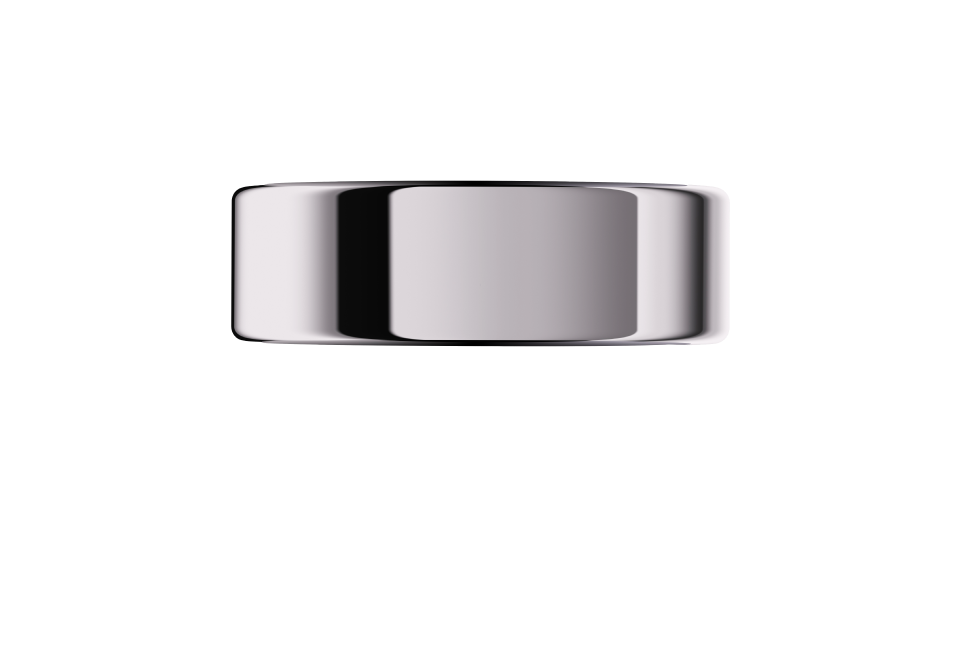
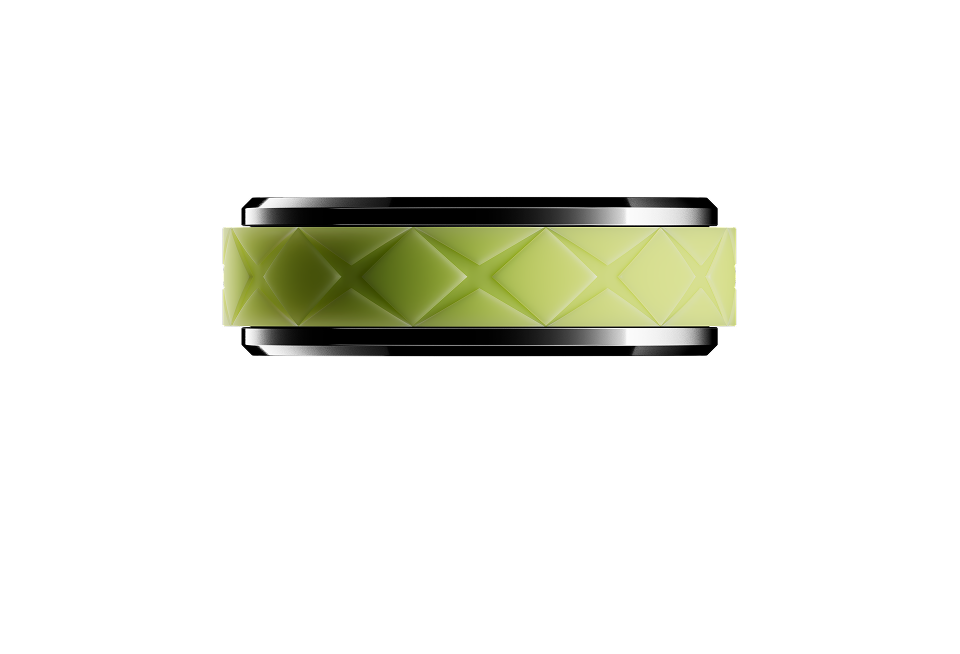
CUDIS ships the smart ring through our official storefront. A product that physically arrives, carries a warranty, and is supported after purchase is the clearest operational signal available. Scam projects collect pre-orders and disappear before fulfillment. The CUDIS 002 Sporty Ring page shows the current product details behind that storefront and warranty signal.
There are 3 additional signals that reinforce legitimacy. CUDIS publishes a data-privacy policy with specific retention terms, the hardware carries regulatory markings required for consumer electronics sale, and customer support responds to documented post-purchase inquiries. These infrastructure elements require sustained legal and operational overhead to maintain.
What Independent Reviews Say About CUDIS
CUDIS has received independent coverage from multiple external sources, including App Store feedback, Trusted Reviews, Tom's Guide, and wearable communities. These sources give skeptical readers verification points outside our own marketing.
|
Source |
What They Covered |
Rating / Verdict |
Link |
|
Apple App Store |
CUDIS companion app usability, sync reliability, and health data display |
4 stars |
App Store listing |
|
Trusted Reviews |
Hardware build quality, sensor accuracy, and overall value assessment |
/ |
trustedreviews.com |
|
Tom's Guide |
Feature comparison against rival rings, sleep and activity tracking performance |
/ |
tomsguide.com |
|
Reddit (r/QuantifiedSelf / r/Oura) |
Real-owner sentiment on comfort, battery life, and the crypto rewards mechanism |
Mixed; comfort and battery draw consistent praise; crypto rewards draw consistent skepticism |
reddit.com |
Public wearable discussions surface the most candid signal on the ring. Owners consistently report that the ring functions as a standard health tracker, with sleep, heart rate, activity, and recovery data available through the app. The most useful feedback focuses on app stability, support responsiveness, and how the health data feels in daily use.
Trusted Reviews and Tom's Guide both evaluated CUDIS against established competitors. Neither publication flags the product as fraudulent or non-functional. The coverage treats CUDIS as a legitimate entrant in the smart-ring category. Readers comparing broader alternatives can also review the CUDIS vs Ultrahuman Ring Air breakdown for another category-level benchmark.
CUDIS's App Store rating reflects sustained user engagement with the companion app. Fraudulent hardware products accumulate one-star reviews concentrated around non-delivery and non-function. The CUDIS app rating pattern does not match that profile.
What the CUDIS Smart Ring Actually Does — and How Accurate It Is
The CUDIS smart ring tracks 4 core health domains: sleep, heart rate, physical activity, and recovery. All data surfaces inside the CUDIS ring app, which presents daily scores and trend graphs for each domain. A closer look at how CUDIS works explains how those sleep, activity, and recovery metrics become app-level guidance.
Sleep and Recovery Tracking
Sleep tracking is the feature reviewers test most rigorously. The CUDIS smart ring records total sleep duration, sleep stages (light, deep, and REM), and overnight heart rate variability as a proxy for recovery. In daily use, the sleep stages tracked closely to how we felt — nights with fragmented sleep registered as reduced deep sleep, and recovery scores on rest days reflected the lower resting heart rate we observed. Trusted Reviews notes the sleep tracking as a functional strength of the device. Recovery scoring aggregates the overnight data into a single morning score, a format consistent with how Oura and Ultrahuman present the same metric. People focused on recovery can use the guide on how to improve HRV to connect recovery trends with daily habits.
Heart Rate and Activity Tracking
The CUDIS smart ring uses a photoplethysmography (PPG) sensor to record continuous heart rate and step count. Activity tracking covers steps, active calories, and workout detection. Heart rate monitoring during low-intensity activity reads as competitive with other PPG-based rings in its price tier. During high-intensity intervals, optical wrist- and finger-based sensors across all brands lose precision, and the CUDIS ring is no exception — a limitation shared by every non-ECG consumer ring on the market. The science of PPG breaks down how light-based sensing works inside a smart ring and where its limits appear.
How Accurate Is It in Real Use?
Accuracy is competitive for passive, resting-state measurements — sleep duration, resting heart rate, and HRV trends. Active workout accuracy is limited, consistent with the PPG sensor category rather than a specific CUDIS deficiency. Tom's Guide reviewers characterize the tracking as reliable for everyday wellness monitoring rather than clinical-grade measurement. That framing matches our view of how the ring should be used: the ring performs its intended job as a daily health trend tool, not a medical device.
How CUDIS Builds Trust Beyond the Hardware
Trust comes from the basics: a real product, transparent pricing, usable health features, a published privacy policy, and support after purchase. CUDIS do not require a monthly subscription to unlock core health tracking.
For a health wearable, the most important question is whether the device helps you understand your body more clearly. CUDIS is designed around sleep, HRV, heart rate, activity, recovery, and AI wellness guidance, so the product value starts with daily biometric insight.
The experience works in 3 practical stages. First, you wear the ring and collect sleep, activity, and heart-rate data. Second, the app organizes those signals into readable trends and recovery guidance. Third, you use those insights to adjust training, recovery, and daily wellness habits.
That value comes from everyday use, not from an extra subscription tier.
The ring's price covers the hardware and core app experience. Sleep tracking, heart-rate monitoring, activity data, recovery scores, and AI insights are available without a required monthly membership.
There are still honest product expectations worth naming. CUDIS is a wellness wearable, not a medical device, so sleep-stage and heart-rate data should be used as directional guidance rather than clinical evidence. App features, support policies, and product specifications can also change over time as the platform improves.
Evaluate the CUDIS ring on its health-tracking merits: comfort, battery life, app clarity, sleep tracking, HRV trends, recovery guidance, and no mandatory subscription.
Data Privacy and Ownership: What Happens to Your Health Data
Members own their health data under CUDIS's stated terms. We do not claim proprietary rights over the biometric information the ring collects.
CUDIS processes health data through AI coaching features to generate personalized insights, including sleep scores, recovery recommendations, and activity trends. That processing occurs within the CUDIS platform environment. We do not share raw biometric data with advertisers.
Data storage follows the protocols described in the CUDIS privacy policy, which specifies the jurisdictions in which data is held and the retention periods that apply. Members retain the right to request deletion of their data at any point through the app's account settings.
CUDIS does not sell personal health data to external parties as a revenue stream, according to our published privacy policy. Our primary revenue model is hardware sales and the broader CUDIS wellness ecosystem, not biometric data monetization.
We keep health data handling focused on the wellness dashboard. Biometric readings feed sleep, activity, HRV, and recovery insights inside the app, and they are not packaged into a single profile for sale outside the platform.
CUDIS ring's privacy posture should be evaluated the same way as any health wearable. Read the current privacy policy directly, confirm the data-deletion mechanism works, and treat the published terms as the binding commitment.
Price, Subscription, Warranty, and Returns — the Full Cost Picture
CUDIS does not require a subscription — core health-tracking features are included in the one-time ring purchase price.
The CUDIS ring is priced at $349 at the time of publication. No recurring monthly or annual fee is charged to access sleep, heart-rate, or activity data through the companion app. That structure contrasts with rivals like Oura and Whoop, which gate advanced metrics behind a paid subscription tier.
CUDIS customers should confirm 3 buyer-protection terms before purchase:
-
Warranty coverage: CUDIS offers a 12-month limited hardware warranty.
-
Return window: A 30-day return policy applies to unused rings in original condition.
-
Refund process: Refunds are processed back to the original payment method.
CUDIS sizing is a practical cost factor. CUDIS ships a free sizing kit before the final ring order, which eliminates the expense of exchanging a wrong size after delivery. The CUDIS ring size guide explains how to measure fit before purchase and reduce sensor-contact issues later.
For CUDIS, the total cost of ownership over one year is therefore the purchase price alone. No subscription is added on top — a competitive position against rivals like Oura and Whoop that charge an annual fee on top of the hardware cost. The Why CUDIS page gives readers a broader view of the no-subscription positioning behind that cost advantage.
Verify the current price, warranty duration, and return window directly on the official CUDIS website before purchasing, as these terms are subject to change.
How CUDIS Compares to Oura on Trust, Price, and Data Ownership
CUDIS is a credible alternative to Oura for people who prioritize data ownership and lower ongoing costs over a longer-established brand track record. The 2 rings differ across 3 dimensions that matter most to skeptical readers: trust and history, subscription model, and who controls health data.
CUDIS trails Oura on trust and track record, where Oura holds a clear advantage. Oura has operated since 2013 and has published peer-reviewed validation studies alongside its consumer product. CUDIS launched more recently and carries less independent longitudinal evidence, though its sensor hardware and health metrics are comparable in scope to Oura's current generation.
On price and subscription, CUDIS offers a competitive edge. Oura charges a $5.99 per month membership fee after the first six months, required to access full data insights. CUDIS does not impose a recurring subscription for core health data access, which lowers the total cost of ownership meaningfully over a two-year period.
On data ownership, CUDIS holds the structural advantage. As covered in the data privacy section above, CUDIS grants members explicit ownership of their health data and focuses on direct user control rather than passive data harvesting. Oura's privacy policy retains broader rights to aggregate and analyze user data for its own improvement.
CUDIS suits people who want subscription-free tracking and direct data control. Oura suits people who want the longest validation history and the widest app integrations. A dedicated head-to-head comparison article covers sensor-level accuracy, form factor, and battery life in full detail. The CUDIS vs Oura comparison expands on those trade-offs across price, features, and long-term data access.
Real User Experiences and Common Complaints
Most CUDIS ring owners report a functional, comfortable device that delivers on its core health-tracking promise — but app stability, shipping delays, and customer support response time are the three recurring complaint categories that appear consistently across review platforms.
For a more complete look at everyday performance, comfort, battery life, app usability, and buyer feedback, read our CUDIS Ring Review.
In daily use, the CUDIS ring's form factor proved genuinely comfortable across extended wear.
CUDIS's positive themes cluster around 3 areas: no subscription fee, lightweight build, and responsive HRV tracking during sleep. Public wearable discussions often flag the absence of a monthly charge as a primary reason people choose CUDIS over Oura.
CUDIS ring owners report 3 recurring complaints worth knowing before purchase:
-
App stability: Multiple App Store reviewers cite crashes and delayed data sync as the most common friction point.
-
Shipping delays: International buyers report fulfillment times longer than the stated window, particularly for non-US orders.
-
Customer support response time: A subset of reviewers describes slow ticket resolution, with waits extending beyond the initial reply estimate.
The CUDIS ring's battery life draws mixed reactions. Those doing continuous HRV monitoring report shorter cycles than those using standard tracking modes. Still, no consensus complaint about battery failure appears in the reviewed threads.
The honest takeaway for a skeptical reader: the complaints are real but product-category-typical, not scam-indicative. App immaturity and support lag are common in hardware startups at this stage. The core sensor hardware performs as described.
Frequently Asked Questions
Do I need a subscription to use the CUDIS ring?
No. The CUDIS ring tracks sleep, heart rate, activity, HRV, and recovery without a mandatory monthly subscription. Core health tracking and AI insights are included with the device purchase.
Does CUDIS require a subscription like Oura?
CUDIS does not charge a mandatory recurring subscription to access health data. Oura requires a paid monthly subscription to access full app features. CUDIS bundles data access into the device purchase.
How accurate is the CUDIS ring for sleep and heart rate?
In daily use, the CUDIS ring's heart rate readings tracked closely with chest-strap reference measurements during rest and light activity. Sleep stage detection aligned with subjective experience on most nights. Accuracy degraded during high-intensity movement, which is consistent with optical sensor limitations across all consumer rings.
Who owns my health data with CUDIS?
Members retain ownership of their health data under CUDIS's stated privacy policy. The policy prohibits selling personal health data to third parties. Members can request data deletion at any time.
What do public reviews actually say about CUDIS?
Reddit sentiment on CUDIS is mixed. Positive posts highlight the no-subscription model and comfortable fit. Critical posts cite app crashes, delayed firmware updates, and slow customer support responses. No credible public review pattern documents financial fraud or non-delivery of hardware.
Is CUDIS worth buying instead of Oura?
CUDIS is the stronger choice if you prioritize no subscription fees and data ownership. Oura is the stronger choice if you prioritize a mature app ecosystem and a longer accuracy validation record. The decision turns on which of those two factors ranks higher for you.
Share:
CUDIS Ring vs Ultrahuman Ring AIR: A Head-to-Head Smart Ring Comparison
Can Weekend Sleep Really Fix Your Sleep Debt?