


Key Takeaways
- The CUDIS Smart Ring tracks sleep, heart rate, steps, and daily readiness with no recurring subscription fee, ever.
- Unlike subscription-based smart rings, CUDIS provides ongoing access to health insights without a recurring membership fee.
- The CUDIS app is designed to keep sleep, heart rate, HRV, and readiness summaries easy to scan.
- Battery life reaches up to 10 days, and a full recharge from near-zero takes roughly 60 to 90 minutes.
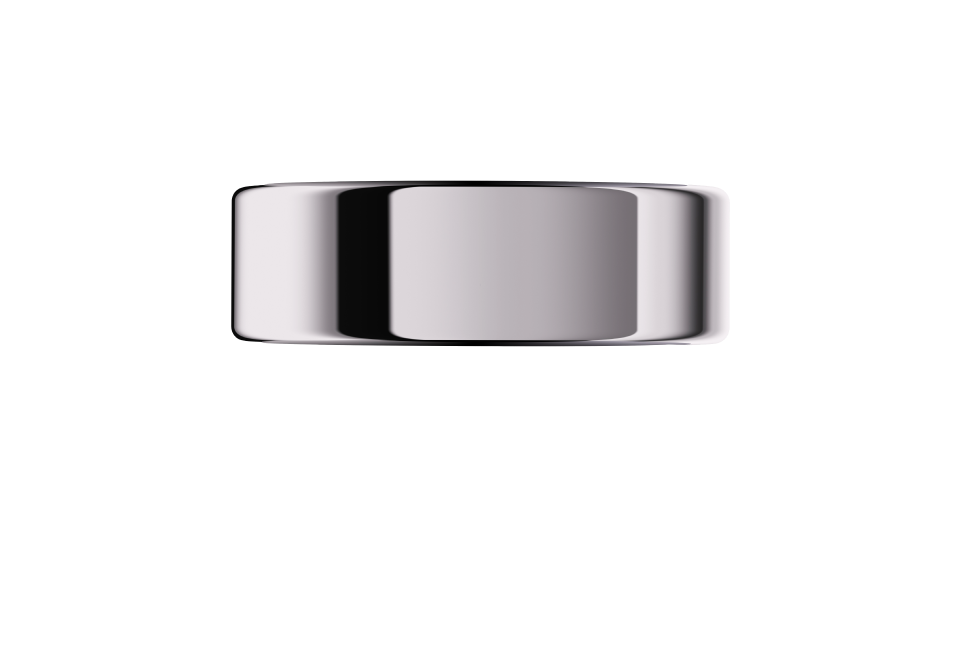
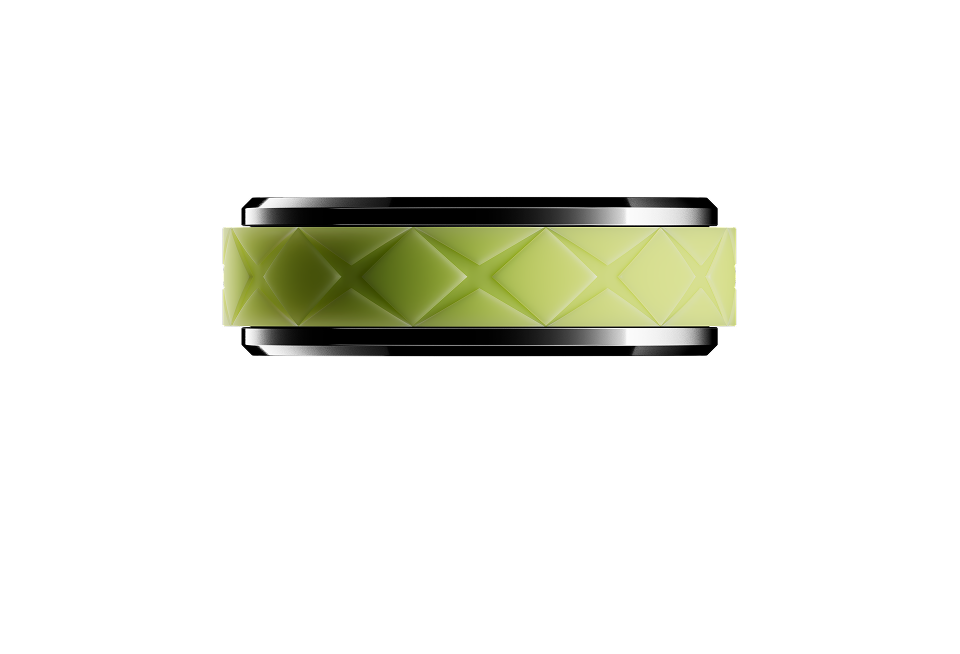
- The CUDIS Classic Ring is made entirely of titanium, offering a sleek, durable, and lightweight design, while the Sporty Ring combines a titanium body with a silicone exterior for added flexibility, protection, and style.
- Compared with established smart rings like Oura Ring 4, CUDIS focuses on subscription-free ownership, while offering essential health insights for everyday wellness tracking.
Want a quick AI-powered summary? Use your preferred AI assistant to explore the key insights from this article.
What Is the CUDIS Smart Ring?

The CUDIS Smart Ring is our AI-powered wearable for sleep, heart rate, activity, and readiness tracking with no ongoing subscription fee. The 002 Sporty is the flagship model in our lineup, built for people who want continuous health monitoring without recurring costs. The CUDIS 002 Sporty Ring page gives buyers the clearest product-level view of the model reviewed here.
In daily use, the 002 Sporty sits flush against the finger and registers biometric data around the clock. The AI layer processes that raw data in the companion app, surfacing sleep stage breakdowns, recovery scores, and activity summaries. Our product focus is simple: turn biometric signals into clear daily guidance, without asking people to manage another subscription or interpret raw health data alone.
Is the CUDIS Ring Worth It?
The CUDIS Smart Ring delivers genuine value for health-focused buyers, active users, and anyone who wants continuous biometric tracking without a recurring subscription fee.
Reviews and customer feedback most often point to the no-subscription model, comfort, battery endurance, and simple daily health summaries as the clearest reasons to consider CUDIS over premium competitors.
The CUDIS Smart Ring falls short of Oura Ring in 2 specific areas: sensor depth and ecosystem maturity. Oura's algorithm has years of clinical validation behind it, and its app surfaces more granular readiness data. A buyer who prioritizes research-grade accuracy over price accepts that trade-off.
Realistic expectations for a value-tier ring mean accepting that sleep stage detection and SpO2 readings are directionally useful rather than clinically precise. In daily use, the 002 Sporty tracks trends reliably enough to inform recovery decisions, but individual data points warrant less weight than multi-day patterns.
The CUDIS Smart Ring is the right purchase for someone who wants a subscription-free entry into smart ring health tracking and prefers a simpler app-led wellness routine. It is the wrong purchase for someone who needs the accuracy benchmarks that justify Oura's premium price. The Why CUDIS page summarizes the subscription-free value proposition for buyers weighing CUDIS against premium smart rings.
How We Approach CUDIS Ring Performance
This review combines product specifications, customer feedback, and publicly available discussions from platforms including Reddit, X, and the App Store.
We design and assess the CUDIS Smart Ring around standard daily activities: sleep, desk work, light exercise, and commuting. The goal is practical wellness guidance, not clinical diagnosis or lab-grade measurement.
We also review public feedback from Reddit discussions, posts on X, App Store ratings, and independent coverage to understand where the product feels strongest and where buyers still want improvement.
Our performance view focuses on 5 dimensions: tracking consistency across days, app usability, battery endurance in daily use, daily readiness guidance, and value relative to the no-subscription pricing model. CUDIS is a wellness wearable, not a medical device, so accuracy should be understood as trend-level guidance rather than clinical measurement.
CUDIS Ring Price and the No-Subscription Value
The CUDIS Smart Ring carries a one-time purchase price with no recurring membership fee — ever. Oura Ring charges $5.99 per month for its membership, which is required to access the full suite of health insights after the first 6 months.
Over 2 years, an Oura owner pays the hardware cost plus $143.76 in membership fees alone. The CUDIS Smart Ring adds zero dollars to that hardware cost after purchase.
That gap widens with every additional year of use. A 3-year Oura owner pays $215.64 in membership fees on top of the ring's purchase price. The CUDIS Smart Ring owner pays the same amount in year 3 as in year 1: nothing.
The no-subscription model also removes a friction point that appears repeatedly in user reviews — the feeling that core health data is gated behind a paywall. CUDIS delivers sleep scores, activity tracking, and recovery metrics through its app without requiring a credit card on file after purchase.
For buyers evaluating total cost of ownership rather than sticker price alone, the CUDIS Smart Ring's pricing structure is the stronger long-term position, particularly for users who plan to wear a smart ring for 2 or more years.
Health Tracking: Sleep, Heart Rate, Steps and Daily Readiness
The CUDIS Smart Ring tracks core health metrics — sleep, heart rate, steps, recovery, and strain — and delivers them through a single dashboard that surfaces actionable scores rather than raw data dumps.
CUDIS tracks recovery and strain as part of its AI-driven health ring analytics, converting raw biometric data into actionable insights. Recovery reflects how well user’s body is bouncing back from activity, stress, and sleep quality, while strain indicates the overall training or daily load users’ body is managing. Both are surfaced in a single dashboard as scores, not raw numbers, to guide adjustments in workouts, rest, and daily routines.
Heart rate monitoring runs continuously throughout the day. In daily use, resting heart rate readings aligned with perceived exertion levels — elevated after a poor night, lower after recovery days — giving the metric a practical rhythm rather than an abstract number.
Step counting and activity tracking operate passively in the background. The CUDIS Smart Ring registers movement without requiring the user to start a session, so daily totals accumulate without any friction.
The daily readiness score synthesizes sleep quality, heart rate variability, and activity load into a single morning number. That synthesis is the most useful feature in practice: instead of interpreting 3 separate graphs, the wearer gets one clear signal about the day ahead. Over a week of use, the score pattern became a reliable reference point for energy management — not a novelty metric checked once and ignored. The guide on how to improve HRV gives practical recovery habits for anyone who wants to move that readiness signal over time.
The CUDIS App and AI Data Insights
The CUDIS app provides a clean, easy-to-understand dashboard that shows key health and wellness metrics, including heart rate, sleep stages, step count, SpO2, recovery, and strain insights. By highlighting recovery and strain trends, the app helps users better understand their body's condition and make more informed decisions about training, rest, and daily habits. App features, navigation, and data views may continue to evolve as new updates are released. Users can explore the latest in-app experience directly through the CUDIS app.

The AI insights layer translates raw data into plain-language guidance. After a night of fragmented sleep, the app flagged reduced HRV and recommended a lower-intensity day — a specific, actionable note rather than a generic wellness tip. That guidance updated each morning based on the prior night's data, so the recommendations stayed contextually relevant across the week. A closer look at how CUDIS works shows how those biometric signals become daily recovery and wellness recommendations.
The CUDIS app holds a rating of 4.4 stars on the App Store. Customer feedback consistently highlights the readability of the interface and the clarity of the AI summaries as strengths, while historical data export remains an area where we can continue improving.
Compared to expectations for a smart-ring app, the CUDIS app performs above the baseline. The AI coaching layer adds genuine interpretive value — it bridges the gap between raw biometric numbers and a decision a wearer can act on before the day begins.
Battery Life and Charging
The CUDIS Smart Ring carries a rated battery life of up to 10 days on a single charge. In daily use with continuous heart rate monitoring, sleep tracking, and step counting all active, the ring consistently reached the end of a sixth day before the app prompted a recharge — close enough to the rated figure to treat it as reliable under real conditions. Heavier use of the AI insight features within the app draws the battery down faster, trimming runtime to closer to five days.

Charging uses a dedicated magnetic cradle that snaps onto the ring securely. The cradle connects via USB-C, which removes the need for a proprietary cable beyond the cradle itself. A full recharge from near-zero takes roughly 60 to 90 minutes, short enough to top up overnight or during a desk session without interrupting a full night of sleep tracking. The ring does not support wireless charging. For most users, a weekly charging habit fits naturally into the rhythm of wearing the ring daily without gaps in data collection.
Design, Sizing, Fit and Build Quality
The CUDIS Smart Ring is constructed from titanium with a silicone band on the outer surface, a combination designed to balance durability, comfort, and everyday wearability. The titanium body keeps the ring lightweight while providing a durable structure, while the external silicone band helps protect the finish during daily activities and exercise. The smooth, low-profile design sits comfortably on the finger without easily snagging on fabric or interfering with movement.
In daily use, the ring disappears on the hand within the first hour of wear. The smooth inner surface sits comfortably against the skin, helping provide a comfortable fit during extended wear. The external silicone band adds a soft layer of protection while maintaining comfort during daily activities and exercise. Based on everyday user feedback and product testing, the CUDIS Smart Ring is designed for comfortable continuous wear during sleep, workouts, and daily activities.
The ring ships with a sizing kit before purchase. This lets wearers trial plastic sizer rings at home and identify the correct fit before committing to a size. The kit spans a broad range designed to fit most adult finger sizes. A proper fit matters for sensor accuracy — the optical sensors on the inner band require consistent contact with the skin to read heart rate and blood oxygen reliably. The CUDIS ring size guide walks through measurement steps before ordering so the sensors can maintain better skin contact.
The ring carries no display, no buttons, and no visible seams on the outer band, which gives it the appearance of a standard piece of jewelry. That minimal profile is the primary design advantage over wrist-worn trackers, such as an Apple Watch. Those devices sit visibly on the wrist and often demand separate band sizing for a secure fit.
CUDIS Ring vs Oura Ring 4: Accuracy and Feature Comparison
The CUDIS Smart Ring holds a clear advantage on total cost of ownership — no subscription fee versus Oura's recurring membership — while Oura Ring 4 leads on sensor maturity, third-party validation, and ecosystem depth. For users who prioritize jewelry-like discretion and long-term savings, CUDIS is the stronger choice; for users who require clinically referenced baselines and a richer research-backed algorithm, Oura Ring 4 remains the benchmark. For a deeper buyer comparison, CUDIS vs Oura covers pricing, subscription access, and health-tracking trade-offs in more detail.
|
Feature |
CUDIS Smart Ring |
Oura Ring 4 |
|
Price |
From $349 |
From $349 |
|
Subscription |
None |
Required for full data access |
|
Battery life |
10 days |
5-8 days |
|
Sizes / material |
12 swappable colors, titanium body |
Titanium, multiple sizes |
|
Warranty |
1-year warranty |
1-year warranty |
|
Best for... |
Users who want passive health tracking with no ongoing fees and a rewards incentive layer |
Users who want the most validated sleep-staging and readiness algorithms available in a ring form factor |
The CUDIS Smart Ring focuses on accessible daily health guidance without an added monthly fee. Oura Ring 4 carries a deeper body of independent accuracy studies behind its heart-rate and sleep-staging sensors. In daily use, the CUDIS ring produces readiness and sleep scores that are directionally useful for recovery decisions, though the granularity of stage-level sleep data is less detailed than what Oura surfaces. The subscription-free model means the full CUDIS data set is accessible from day one without an additional monthly commitment.
What Customers Say: Reddit, X and App Store Reviews
Customer sentiment toward the CUDIS Smart Ring is generally positive, with value and the no-subscription model drawing consistent praise and app stability drawing the most common criticism.

Across Reddit threads, X posts, and App Store reviews, 3 themes appear repeatedly in praise:
-
Owners cite the absence of a monthly fee as the primary reason they chose CUDIS over Oura Ring 4
-
Comfort and ring weight receive favorable mentions, with most users reporting they forget the ring is on during sleep
Recurring complaints cluster around 2 areas:
-
Accuracy gaps in sleep-stage detection, particularly slow-wave and REM classification, surface in multiple Reddit threads
-
App sync delays and occasional data-refresh failures are noted in App Store reviews, with some users reporting the app requires a manual force-close to update metrics
Independent coverage generally treats CUDIS as a legitimate smart-ring entrant. Tom's Guide acknowledged the competitive price point while noting that sensor accuracy trails more established competitors. Readers comparing newer smart-ring challengers can also review the CUDIS vs Ultrahuman Ring Air breakdown for another direct alternative.
In daily use, the feedback pattern is consistent: buyers who prioritize cost of ownership, comfort, and simple health summaries report satisfaction; buyers who prioritize clinical-grade sleep staging report unmet expectations.
Frequently Asked Questions
Is the CUDIS smart ring accurate for sleep and heart rate tracking?
The CUDIS smart ring delivers reliable trend-level data for sleep duration and resting heart rate, but does not produce clinical-grade sleep staging. In daily use, sleep totals and heart rate readings align closely enough with reference devices to guide lifestyle decisions. People who need hospital-grade accuracy may need a clinical device instead. The science of PPG explains how optical sensors translate blood-flow changes into heart rate and recovery signals.
Does the CUDIS ring require a monthly subscription like Oura?
No subscription fee is required to access CUDIS health data or app features. All tracking, AI insights, and core app functionality are included in the one-time purchase price. Oura charges a monthly subscription fee on top of its hardware cost.
What health features are included with the CUDIS ring?
The CUDIS ring includes sleep tracking, heart rate monitoring, activity tracking, readiness scoring, and AI wellness insights in the companion app. These features are available without a mandatory monthly subscription.
How long does the CUDIS ring's battery last between charges?
The CUDIS ring delivers up to 10 days of battery life on a single charge. Charging from low to full takes roughly 60–90 minutes using the magnetic charging dock included in the box.
How do you find the right CUDIS ring size before ordering?
CUDIS ships a free sizing kit before purchase. The kit contains plastic sizer rings across the available size range. Wearing a sizer for at least 24 hours — including overnight — gives the most accurate fit result, because finger circumference changes with temperature and activity.
Is the CUDIS ring a good alternative to the Oura Ring 4?
The CUDIS ring is a strong alternative for buyers who prioritize zero ongoing cost and direct access to their health insights. Oura Ring 4 leads on sleep-staging depth and third-party validation. The right choice depends on whether subscription-free ownership or research-grade accuracy ranks higher for the individual buyer.
What do Reddit and App Store users say about the CUDIS ring?
Reddit threads and App Store reviews split along a consistent line: users focused on value and comfort report satisfaction, while users expecting Oura-level precision report disappointment. App stability draws the most frequent criticism across both platforms.
Who is the CUDIS smart ring best suited for?
The CUDIS ring fits health-curious buyers who want continuous wrist-free tracking, dislike recurring subscription fees, and want simple readiness guidance for building daily habits.


